When Does a Building Need a New Rooftop Unit?
Commercial rooftop unit installation usually starts with a space that will not cooperate. A new tenant moves in with more people and equipment than the old layout. A fit-out adds a server room or a kitchen. A floor gets split into two suites that need their own zones. Or a split system that was squeezed in years ago never kept up, and the back of the space is always 4 degrees warmer than the thermostat.
In each case the answer is the same: size the load properly, then put the right packaged unit on a proper curb. A packaged rooftop unit puts the compressor, coils, fans and gas heat in one cabinet, so it frees up interior space and keeps all service on the roof.
How We Size a Commercial RTU
We size every new install with a Manual J load calculation and Manual S equipment selection. That means accounting for:
- Floor area, ceiling height and envelope
- Glazing and orientation (west-facing retail glass is a big summer load)
- Occupancy, lighting and plug loads
- Kitchen equipment and make-up air interaction
- Ventilation requirements under ASHRAE 62.1 and efficiency rules under ASHRAE 90.1
The output is a tonnage and a short list of units with the right capacity, staging and efficiency (IEER). Rule-of-thumb sizing (one ton per X square feet) is how buildings end up with oversized units that short cycle or undersized ones that run flat out all July.
The most common mistake we fix
A contractor quotes a 5-ton split when the roof and the load need a 10-ton packaged unit. The split never reaches setpoint, the tenant complains, and the PM pays twice. Sizing first prevents it.
What a Commercial RTU Installation Includes
Curb, structure and roof
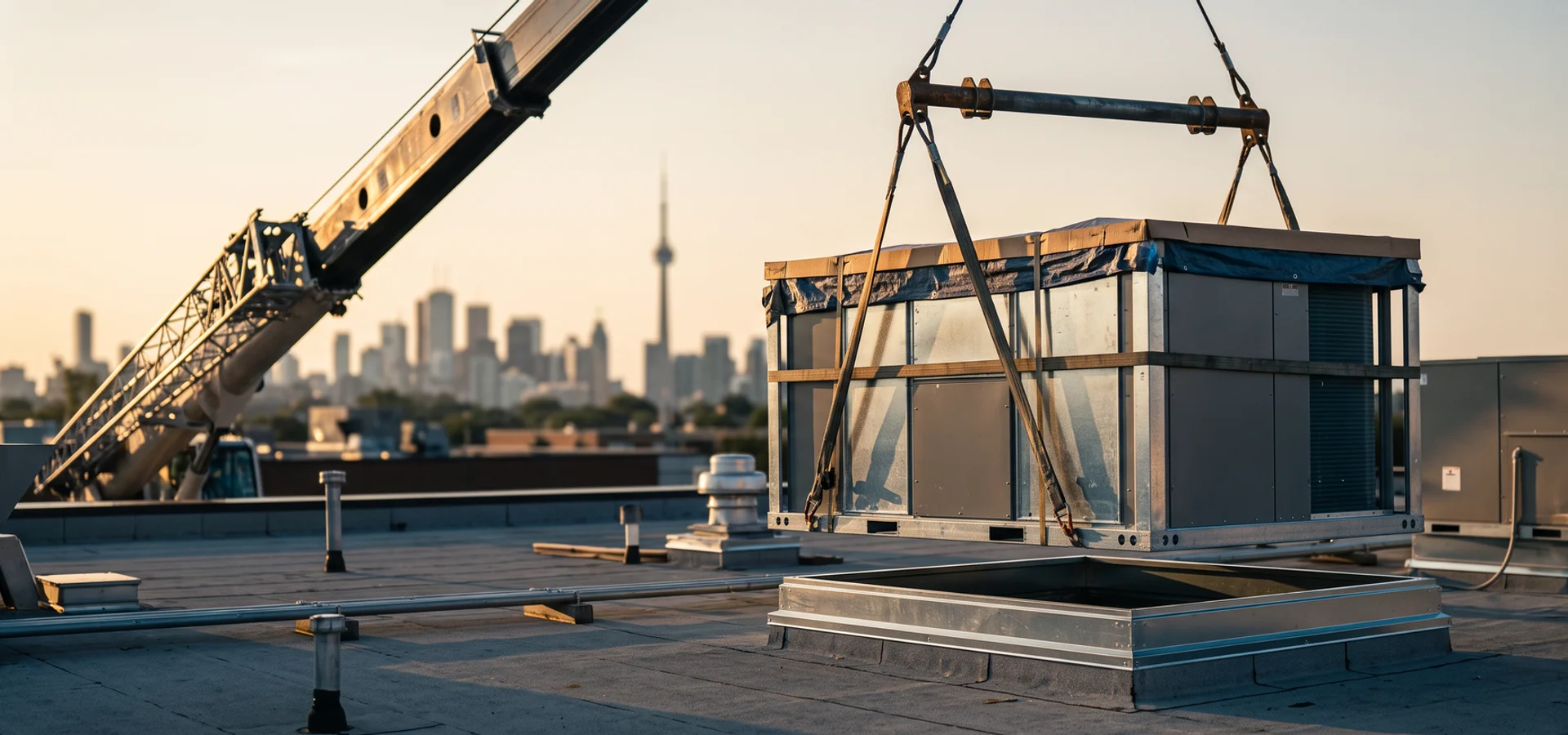
New units sit on a galvanized roof curb that is set level and flashed into the membrane. On older buildings, or when a heavier unit goes up, we arrange a structural engineer review before the lift. When the unit goes onto an existing opening, our shop fabricates curb adapters so the duct openings line up.
Crane day
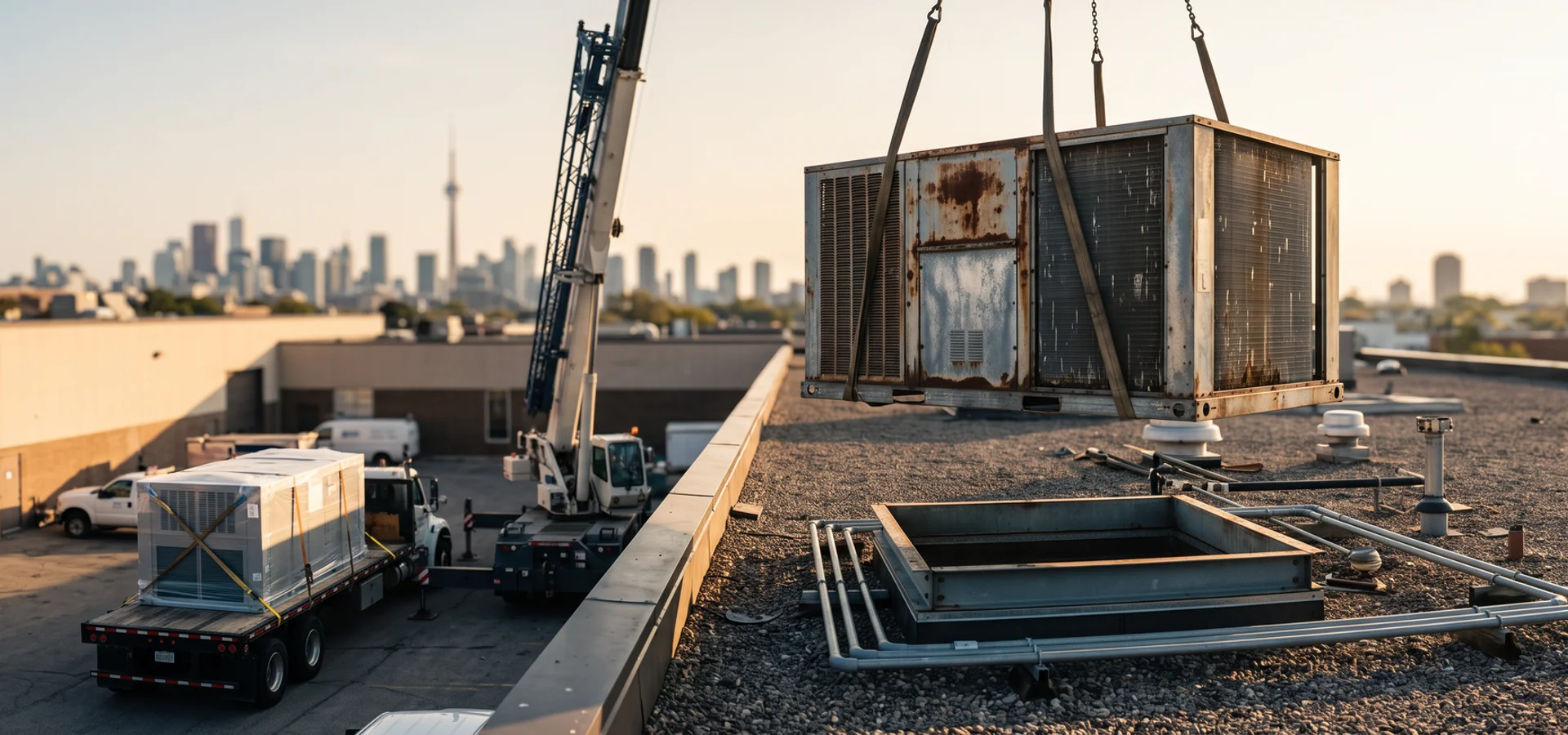
We book the crane, build the rigging plan with spreader bars, and file City of Toronto ROW and street occupancy permits when the crane sits on a public road. Downtown lifts usually happen early on weekend mornings. Suburban plazas and industrial parks in Mississauga and Vaughan usually lift from the parking lot.
Connections
Our TSSA G1 and G2 techs connect gas to CSA B149.1 code, ESA-licensed electricians handle the disconnect and power, and the crew connects condensate and ductwork. Red Seal HVAC-R leads handle the refrigeration side and startup.
Controls and commissioning
We set up the unit controller or thermostat, integrate with your BAS over BACnet where you have one, calibrate the economizer and verify every point. The commissioning sign-off report lists startup readings, settings and serial numbers.
How Much Does Commercial RTU Installation Cost in Toronto?
Installed ranges by tonnage, CAD before HST:
| Size | Installed price | Timeline |
|---|---|---|
| 3-5 ton RTU | $9,500-$16K | 3-5 days |
| 10 ton packaged | $18K-$34K | 5-7 days |
| 15-20 ton | $32K-$58K | 7-10 days |
| 25 ton + large | $55K-$95K | 2-3 wks |
| Multi-tenant per-unit | $8,500-$14K/unit | Phased |
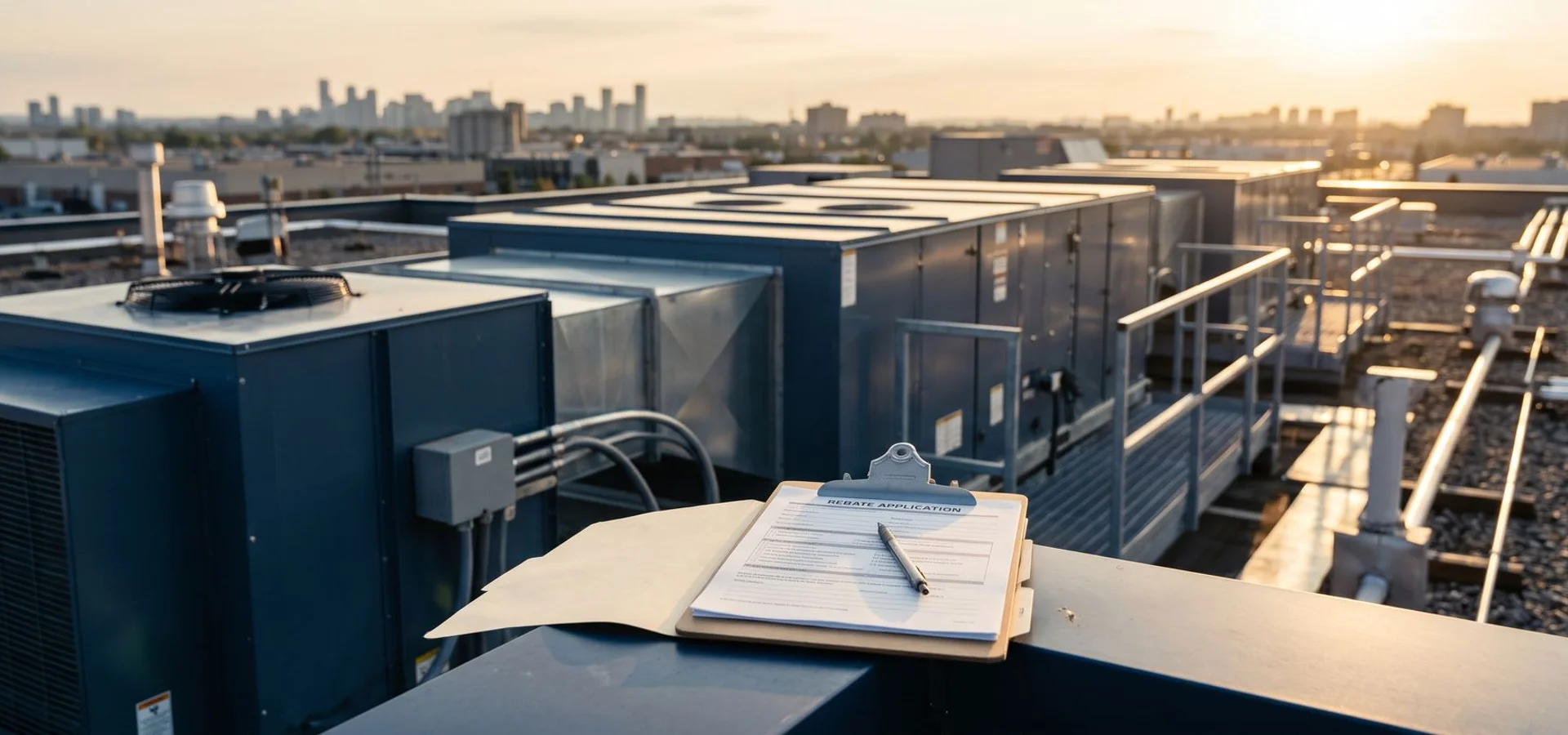
Where a job lands in each range depends on crane reach, curb work, electrical capacity, controls and the unit's efficiency tier. High-efficiency units often qualify for Save on Energy retrofit rebates of $200-$1,500 per ton, netted on the final invoice.
Types of Commercial RTU Installs We Handle
- Added capacity for a tenant fit-out, expansion or new server room
- Split-to-packaged conversions when an indoor air handler and condenser no longer make sense
- Heat pump RTUs for electrification goals, often with Enbridge HER+ support
- Multi-tenant programs where each suite gets its own unit, phased by lease dates
- Large 15-25 ton units for warehouses and big-box retail, with dual refrigeration circuits
If the job is swapping an existing unit at end of life, see commercial rooftop unit replacement. For help choosing equipment, our packaged rooftop units page compares gas/electric and heat pump options.
Installation vs Doing Nothing
Living with an undersized system costs more than it looks. It runs flat out, burns hydro, wears out compressors and still leaves tenants unhappy. A properly sized commercial rooftop unit on a proper curb, commissioned and documented, should run 15-20 years on a Toronto roof with regular maintenance.