Why Rooftop Units Fail in July and January
Commercial rooftop unit maintenance exists because most RTU failures are predictable. The summer no-cool call is usually a dirty condenser coil, a weak run capacitor, a slipping belt or a clogged filter. The winter no-heat call is usually a dirty flame sensor, a worn igniter or a cracked heat exchanger. Every one of those can be spotted on a routine visit weeks before it fails.
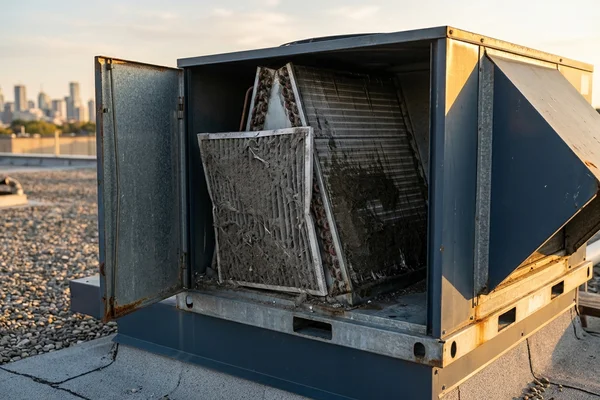
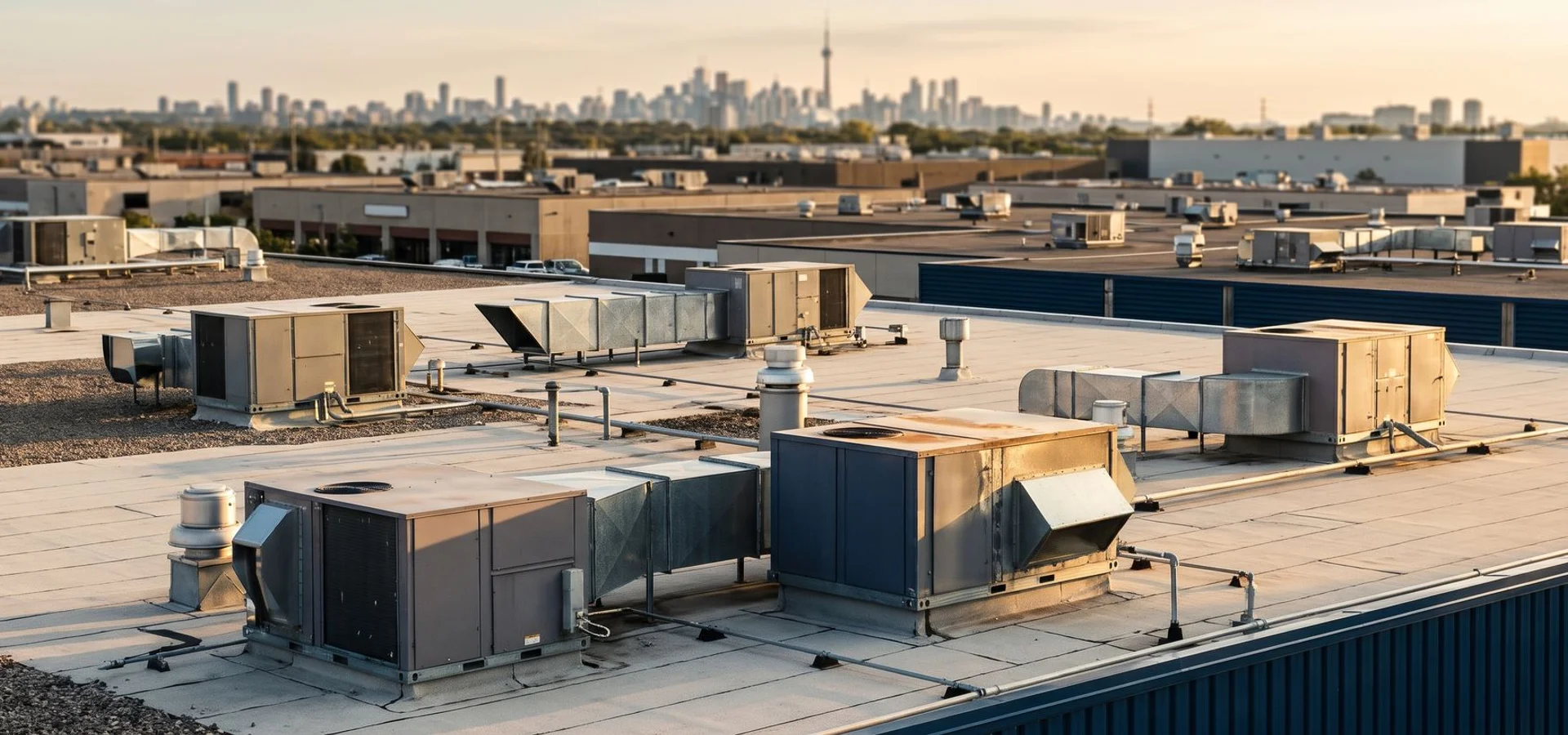
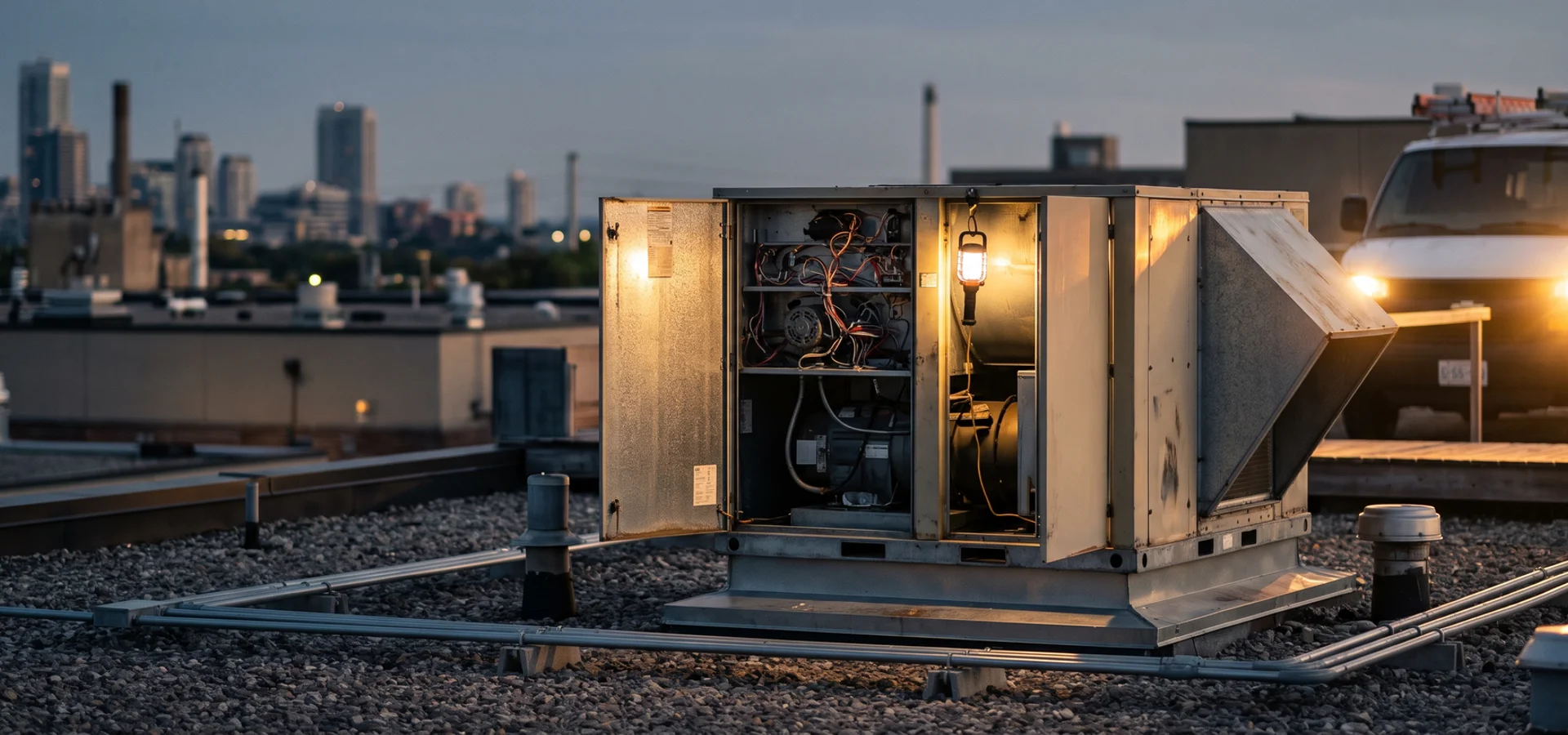
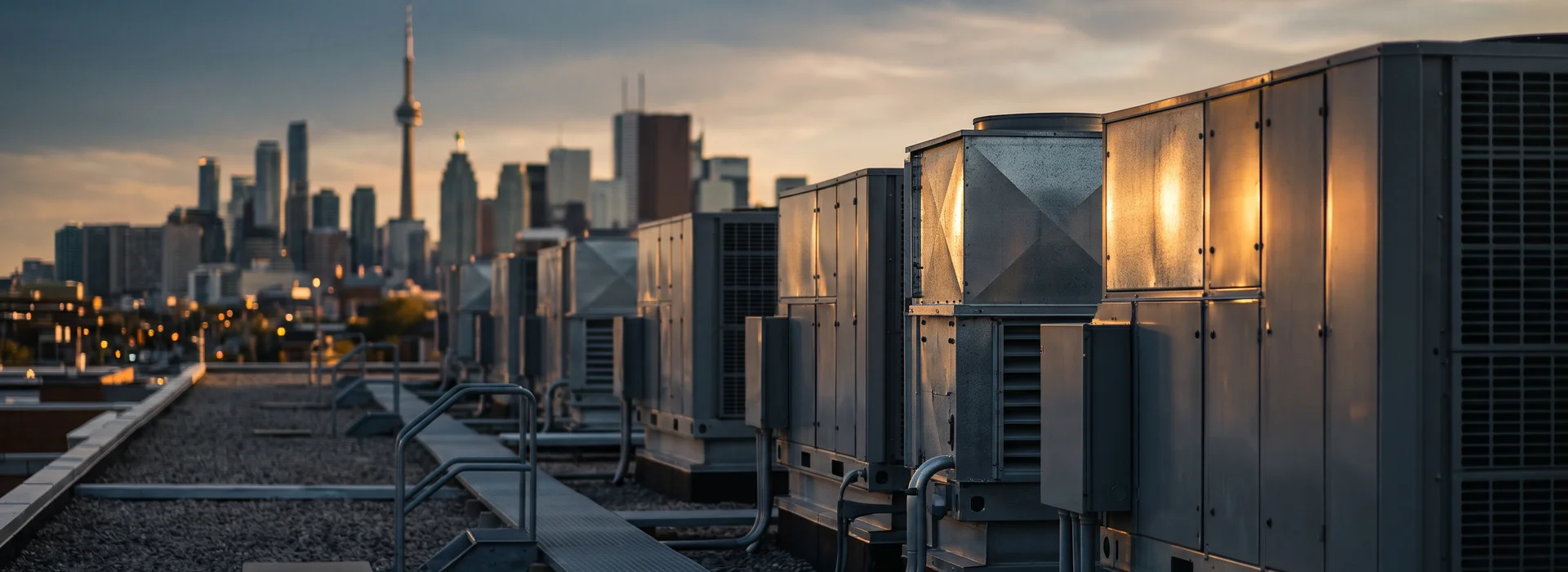
Toronto roofs are hard on commercial rooftop units. Cottonwood fluff and road dust coat coils in June, humid 32C afternoons push compressors to full load, and freeze-thaw cycles crack drains and loosen electrical lugs. A unit that only sees a tech when it breaks will break more often.
What Our Quarterly RTU Maintenance Covers
Every preventive maintenance agreement follows a set checklist so nothing depends on who shows up:
Spring cooling startup
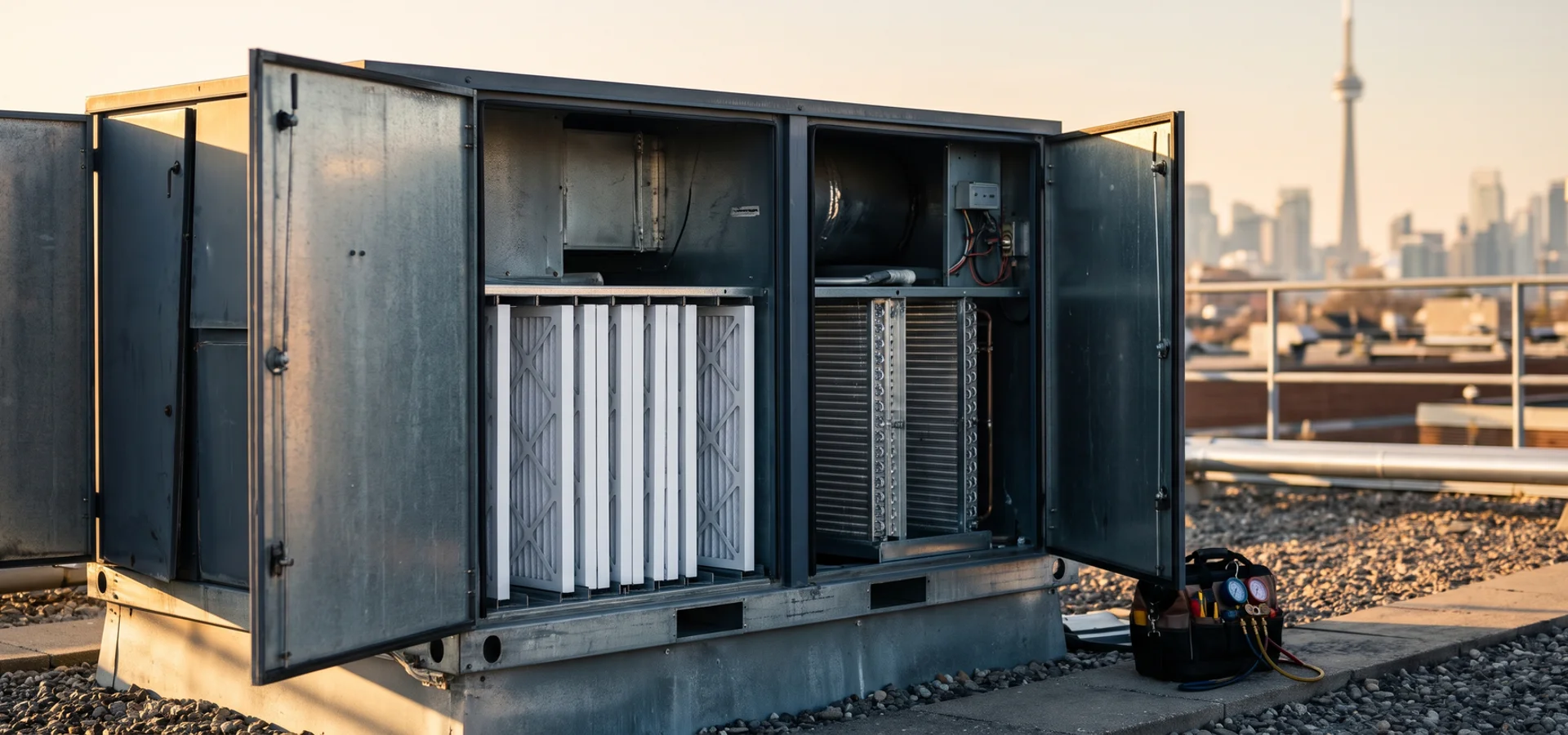
- Coil cleaning on condenser and evaporator
- Filter change (MERV 8 standard, MERV 13 filters where the blower can handle them)
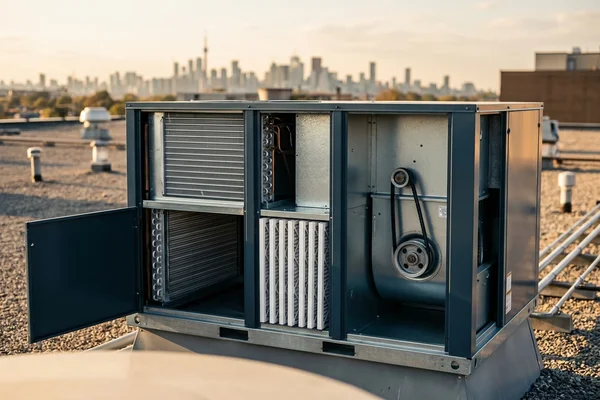
- Belt tension and pulley alignment
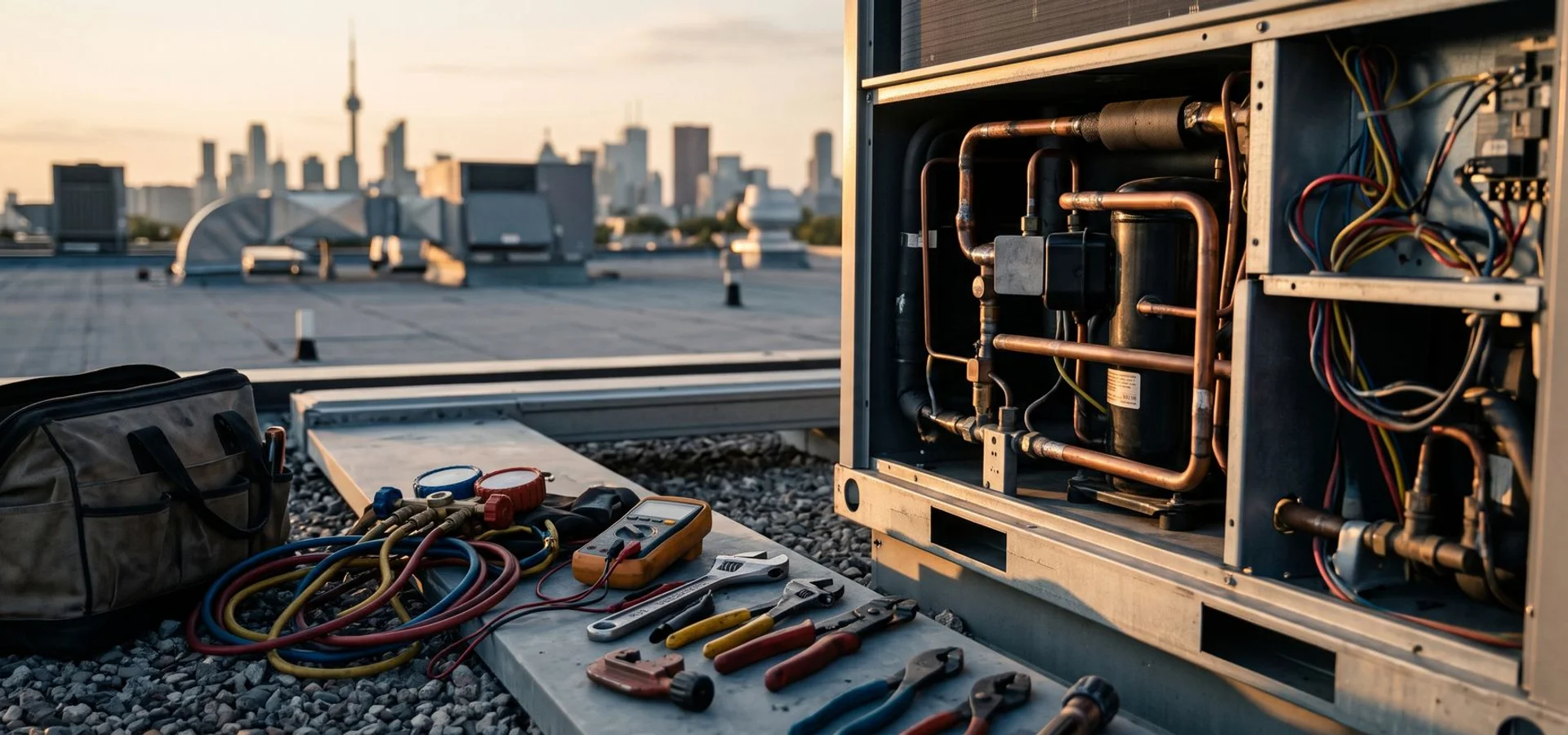
- Refrigerant pressures with superheat and subcooling
- Contactor, capacitor and electrical connection checks
- Economizer calibration and damper operation
Summer check
- Filters, belts and coil condition
- Condensate drain flush and pan inspection
- Amp draws on compressors and fan motors
- Controls, thermostat or BAS sequence check
Fall heating startup
- Heat exchanger inspection for cracks and corrosion
- Flame sensor, igniter, inducer and gas valve checks by TSSA techs
- Combustion and venting checks
- Economizer changeover for heating season
Winter check
- Filters and belts
- Low-ambient operation for units serving server rooms
- Snow and ice clearance around the unit and curb
Each visit ends with a written report per unit: readings, photos, parts replaced and recommendations. Sites on BAS platforms like Johnson Controls Metasys or Honeywell also get a controls sequence check.
The report is the product
A good maintenance report tells a PM three things: what was done, what is getting worse, and what to budget for next year. That is how 48 GTA sites under contract with us plan replacements instead of reacting to them.
How Much Does RTU Maintenance Cost in Toronto?
| Plan | Price | Visits |
|---|---|---|
| Annual RTU maintenance | $295-$450 per unit per year | Quarterly |
| Bulk 12+ units per site | $240-$340 per unit per year | Quarterly |
| Portfolio contract (10+ sites) | $35K-$180K per year | Ongoing |
Where a unit lands depends on size, type (gas/electric, heat pump, MUA), access and filter count. Pricing is locked for the term. Repair parts beyond small items are quoted separately at contract labour rates.
Maintenance vs Break-Fix: The Real Cost
| Break-fix only | Quarterly maintenance | |
|---|---|---|
| Emergency calls | Frequent, after-hours rates | Rare, priority dispatch |
| Hydro use | Higher (dirty coils, bad economizers) | Lower |
| Equipment life | Shorter | 15-20 years typical |
| Capex planning | Forced by failures | Planned 1-2 years ahead |
One after-hours compressor call at $425-$650 plus a $2,400-$5,600 compressor usually costs more than several years of maintenance on that unit.
Maintenance for Property Managers and Portfolios
PMs need more than clean coils. Our contracts include a COI within 24 hours on every request, WSIB clearance, Net-30 invoicing per site or per portfolio, and one point of contact. For owners with several buildings, our facility management HVAC contracts roll every site into one agreement.
We maintain plazas in Brampton and Oakville, offices along the Yonge corridor in North York, walk-ups in Palmerston, and industrial parks in Mississauga. When a visit finds something serious, the repair is quoted in writing before any work is done.
When Maintenance Is Not Enough
If a unit is past 15-20 years, runs on R-22 or needs a major repair every season, maintenance only delays the inevitable. The report will say so, with a replacement range and the Save on Energy rebate that would apply.