When Is a Rooftop Unit Failure an Emergency?
Emergency rooftop unit repair is for the calls that cannot wait until Monday. No cooling on a 32C Saturday in a restaurant. No heat at 6am in a dental clinic with a full schedule. A breaker that keeps tripping in a retail store. Water pouring from a unit into a tenant's ceiling. A burning smell from the roof.
Each of those costs real money by the hour: spoiled food, cancelled patients, closed stores, angry tenants. Our emergency service exists so you are not waiting on a call centre to book you for later in the week.
What Happens When You Call
A person answers dispatch, 24/7. We confirm the building, how many units are down, what the symptoms are and how the tech gets on the roof. A Red Seal HVAC-R tech is assigned within a 30-minute window and is on the roof in 2-4 hours across the GTA core.
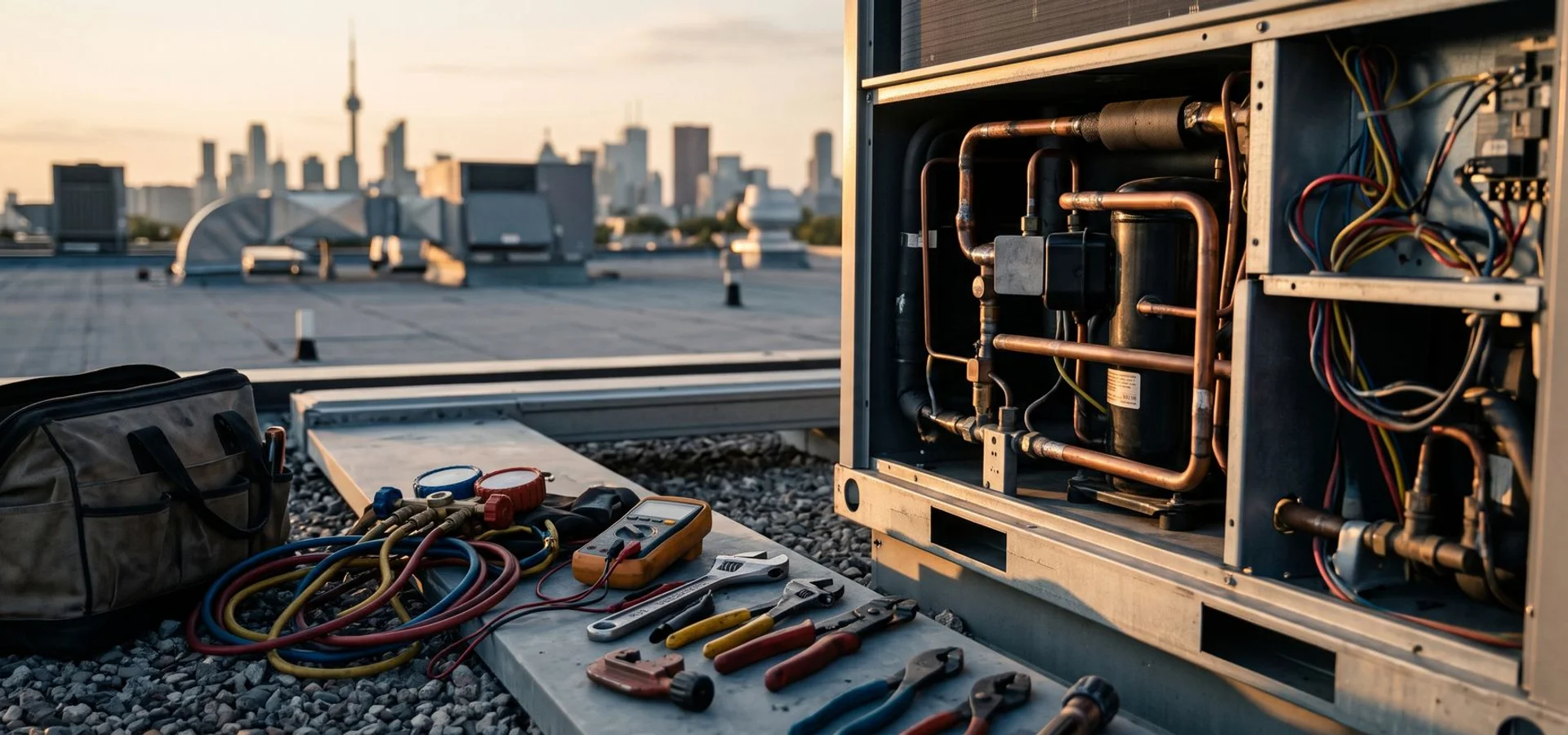
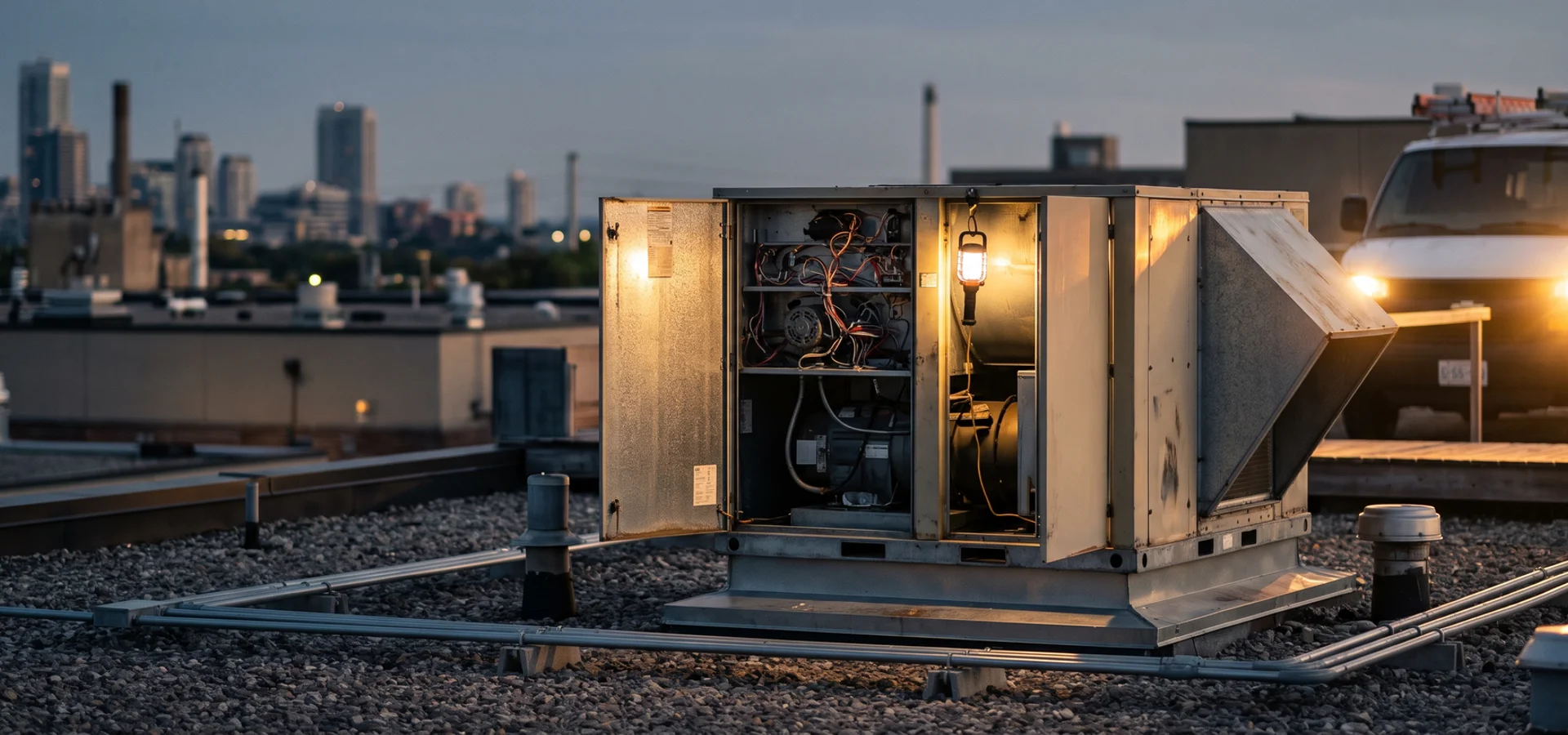
On site, the tech follows lockout tagout, makes the unit safe and works through electrical, gas, refrigerant and controls in order. Gas sections with a cracked heat exchanger or failed safety are locked out until repaired. Our leads hold TSSA G1 and G2 gas and ESA electrical tickets, so one tech can work the whole cabinet.
Do not keep resetting the breaker
A breaker that trips again and again is protecting a shorted compressor, seized motor or wiring fault. Each reset risks turning a contactor or motor repair into a $2,400-$5,600 compressor.
The Most Common Emergency RTU Failures
No cooling
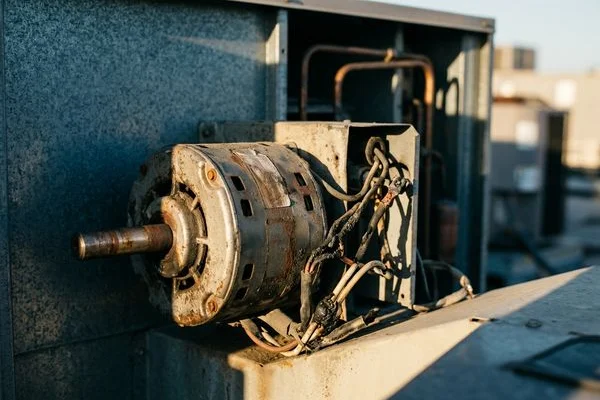
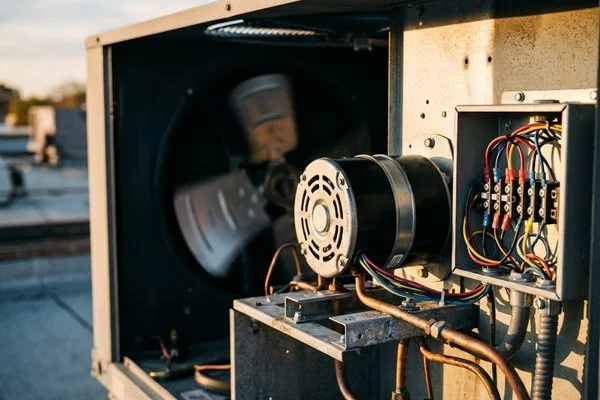
Failed capacitors and contactors, seized condenser fan motors, tripped high-pressure switches from dirty coils, low charge from a leak, or a compressor that will not start. Most are fixed with parts from the van.
No heat
On gas-fired RTUs, winter calls are usually the flame sensor, igniter, inducer motor, pressure switch or gas valve. Our TSSA techs test combustion and inspect the heat exchanger before restarting.
Tripped breakers and burning smells
Usually a shorted compressor, seized fan motor or burnt wiring. These are fixed only after the electrical fault is found, never by resetting and walking away.
Water leaking from the unit
Blocked condensate drains, iced evaporator coils thawing, or failed roof curb flashing. The leak is stopped first, then the cause is fixed.
Temporary Cooling and Heating
When a unit needs a part that is not on the van, such as a compressor or coil, we set up temporary cooling or temporary heating so the space stays open. Server rooms, clinics and kitchens get this first. Most compressors are sourced same or next day from GTA distributor stock.
How Much Does Emergency RTU Repair Cost?
| Item | Price | Timing |
|---|---|---|
| After-hours / weekend call-out | $425-$650 | 2-4 hr on-roof |
| Labour after-hours | $280/hr | |
| Labour weekend | $425/hr | |
| Compressor repair / replace | $2,400-$5,600 | 1-2 days |
| Refrigerant leak + recharge | $850-$2,800 | Same-next day |
You see the tally before work starts, even at 2am. For non-urgent problems, a business-hours commercial rooftop unit repair visit costs less.
Who Gets Priority
Restaurants, retail, dental and medical sites go to the front of the queue. Sites on a maintenance contract also get priority dispatch and locked labour rates. Kitchens with backdrafting hoods often have a make-up air problem as well; see make-up air unit service.
Preventing the Next Emergency
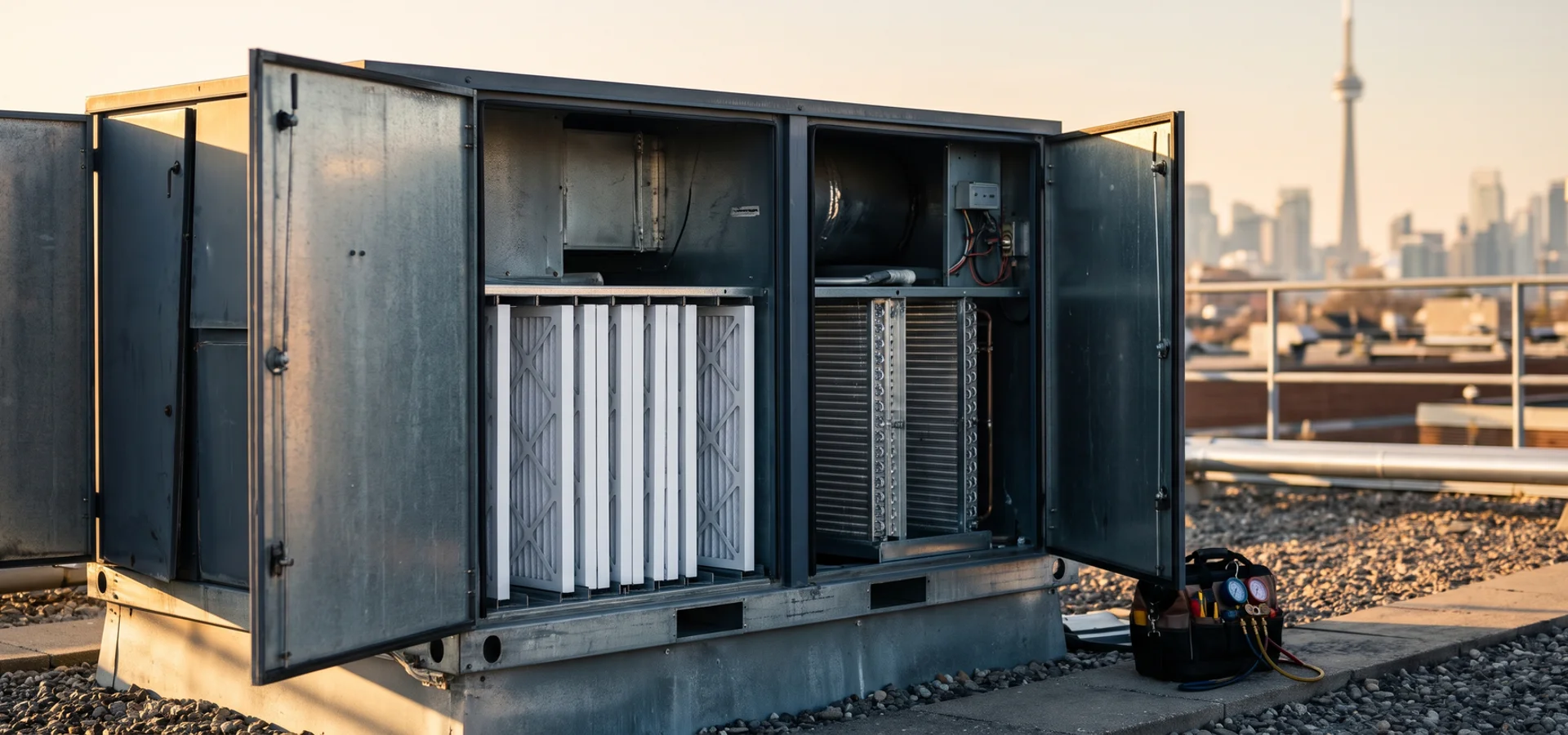
Most emergency calls trace back to something a quarterly visit would have caught: a bulging capacitor, a frayed belt, a dirty condenser coil or a weak flame sensor. After an emergency, the written report lists what else on the unit is close to failing, so you can fix it on your schedule instead of the unit's. We cover commercial rooftop units across the whole GTA core, from Downtown Toronto to Markham and Mississauga.