What Is Going Wrong With Your Rooftop Unit?
Commercial rooftop unit repair starts with the symptom, not the part. A packaged RTU that will not cool, will not heat, short cycles, ices its evaporator or trips its breaker is telling you something specific. The job is to find out what before anyone orders a compressor.
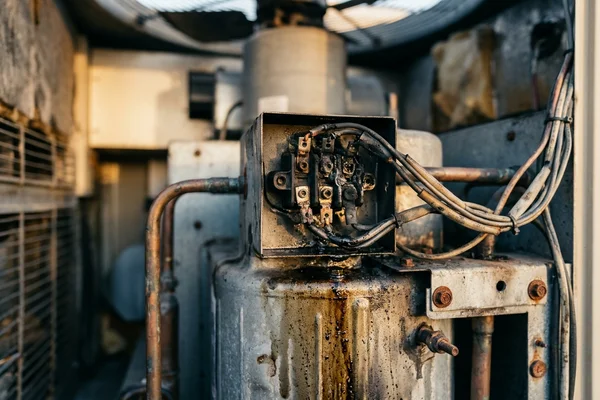
Most of the commercial rooftop units we are called to in Toronto have one of four problems: an electrical failure (contactor, capacitor, fan motor, wiring), a refrigerant problem (leak, restriction, failed TXV), an airflow problem (dirty filters, slipping belts, iced coil) or a controls problem (economizer, thermostat, board or sensor). Those four groups explain almost every no-cool call on a GTA roof.
The trouble is that the symptoms overlap. An iced evaporator can be low charge, low airflow or a failed defrost control. A compressor that will not start can be a dead compressor, or it can be a $40 capacitor. That is why residential-trained techs often swap expensive parts on commercial equipment: they are guessing.
How Our Red Seal Techs Diagnose a Commercial RTU
Our leads hold Red Seal 313A Refrigeration and Air Conditioning Mechanic certification plus TSSA G1 gas and ESA electrical tickets. Every diagnostic follows the same order, so nothing is skipped:
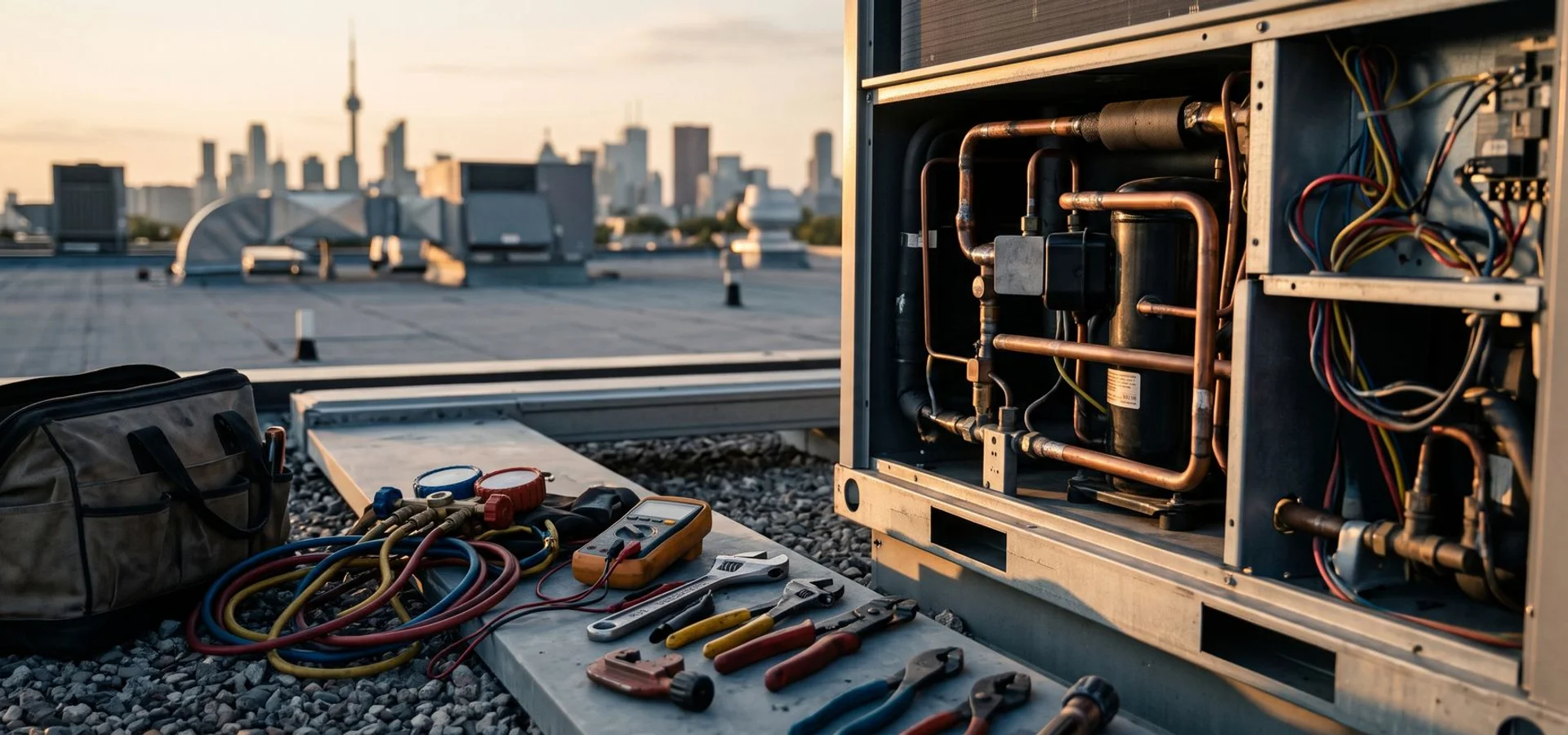
- Electrical first. Line voltage, control voltage, contactor condition and capacitor values are measured. Compressor windings get a megger winding test before anyone calls a compressor dead.
- Refrigerant second. Gauges go on and we read superheat and subcooling against the manufacturer chart. That tells us whether the TXV, the charge or a restriction is the issue.
- Airflow third. Filters, belts, blower speed and static pressure are checked, because a starved coil will look like a refrigerant fault.
- Controls last. We pull fault codes from the unit controller, check the thermostat or BAS signal, and test the economizer enthalpy sensor, actuator and damper linkage.
Only then do you get the written tally: failed parts, labour hours, timeline and total, with HST on its own line.
Why the order matters
On our Dundas West job, a 7-ton Lennox LCG had already been condemned by another contractor. The megger test showed one grounded compressor in an otherwise sound unit. The repair was $3,850 all-in, a fraction of a replacement.
Types of Commercial RTU Repair We Handle
Compressor repair and replacement
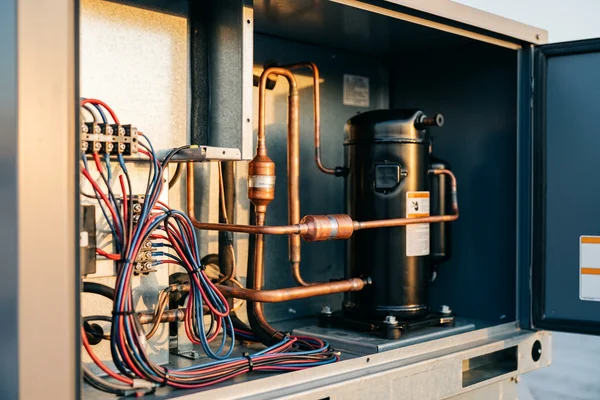
Scroll compressors in 3-25 ton packaged units fail from overheating, liquid floodback, electrical faults or plain age. A compressor repair or replacement runs $2,400-$5,600 depending on tonnage and roof access. We braze in a new filter drier, pressure test with nitrogen, pull a deep vacuum and recharge by weight, then log startup readings.
Refrigerant leak search and recharge
Leak search and recharge runs $850-$2,800, with R-410A billed at $85/lb. We use electronic detection, bubble testing and nitrogen standing pressure to find the leak, then repair it before recharging. Topping up a leaking unit without a repair is money lost, and we will not do it on a commercial system without telling you so in writing.
Economizer and controls repair
Economizer and controls diagnostics run $450-$900. Stuck dampers, failed actuators, drifting enthalpy sensors and bad changeover setpoints waste energy all year and can freeze coils in winter. We also repair Honeywell, Johnson Controls and OEM unit controllers and fix thermostat and BAS communication faults.
Fans, motors, belts and electrical
Blown condenser fan motors, worn blower belts, burnt contactors and failed capacitors are the most common same-day fixes. Our vans carry the parts for Lennox, Carrier, York, Trane and Daikin units, so most of these repairs finish on the first visit.
Gas heat section
Winter calls are usually flame sensors, igniters, inducer motors, gas valves or limit switches. Our TSSA G1 and G2 techs test combustion and inspect the heat exchanger. A cracked heat exchanger is a safety issue and the unit will be locked out until it is fixed or replaced.
When Do You Need RTU Repair Instead of Maintenance?
Call for repair when the unit stops doing its job: no cooling, no heat, tripped breakers, burning smells, water leaking into the space, loud grinding or banging, or a space that will not hold setpoint. Book commercial rooftop unit maintenance when the unit runs but hydro bills are rising, belts squeal or the same small faults keep coming back. Quarterly maintenance prevents most of the repairs on this page.
If the unit is down after hours or on a weekend and tenants are affected, go straight to emergency rooftop unit repair. Dispatch answers 24/7 and a tech is on the roof in 2-4 hours across the GTA core.
Repair or Replace? The Math We Put on Paper
Every tally on an older unit includes a repair-vs-replacement note. We weigh four things:
| Factor | Lean toward repair | Lean toward replacement |
|---|---|---|
| Unit age | Under 12 years | Over 15-20 years |
| Refrigerant | R-410A or newer | R-22 with an active leak |
| Repair size | Under 30% of a new unit | Second compressor or failed heat exchanger |
| Repair history | First major failure | Repeat failures in 2-3 years |
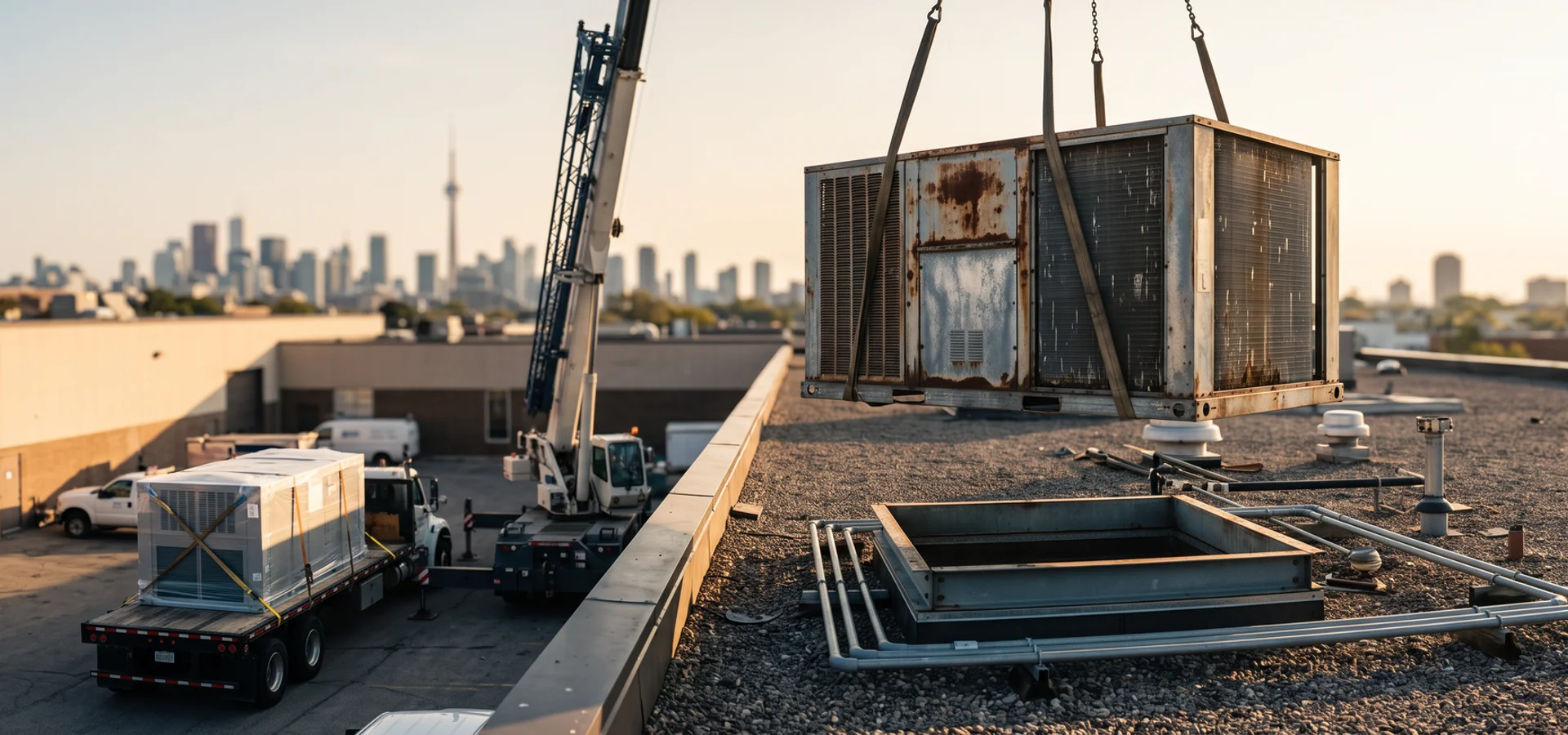
When replacement makes more sense, the note shows the installed range for the right tonnage (3-5 ton $9,500-$16K, 10 ton $18K-$34K, 15-20 ton $32K-$58K) and the Save on Energy rebate that would apply. See commercial rooftop unit replacement for how we handle curb adapters and crane day.
Repair Calls Across Toronto and the GTA
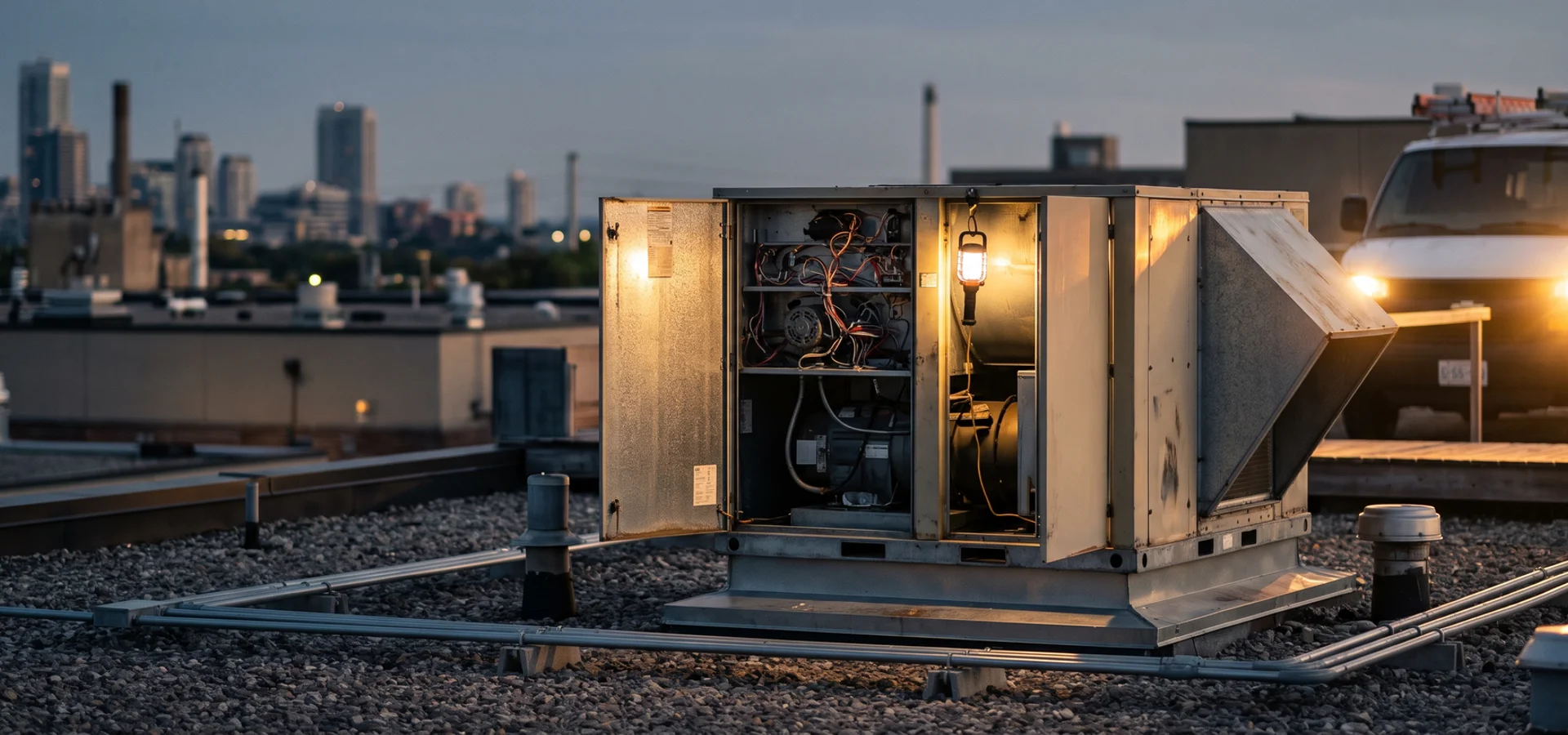
We repair RTUs on retail plazas in King West and The Queensway, office buildings along the Yonge corridor in North York, clinics in Davisville and Leaside, restaurants in Liberty Village and industrial roofs in Mississauga and Scarborough. Downtown work often needs a lift or hoisting plan for parts, and we handle that as part of the job.
Why DIY or a Residential Tech Costs More
Commercial RTUs run three-phase power, multi-stage compressors, economizers and gas sections in one cabinet. A wrong guess on a 10-ton unit can mean a $5,000 compressor that did not need replacing, or a cracked heat exchanger that was missed. Repairs on refrigerant circuits also legally require a licensed technician in Ontario. A proper commercial diagnostic costs $275-$425 and usually saves far more than that.