Why Constant-Speed Fans and Pumps Waste Hydro
Most fans and pumps in commercial HVAC were designed for the hottest or coldest day of the year. The rest of the time they still run at full speed, with dampers or balancing valves throttling the flow. That is like driving with the gas pedal flat and the brake half on.
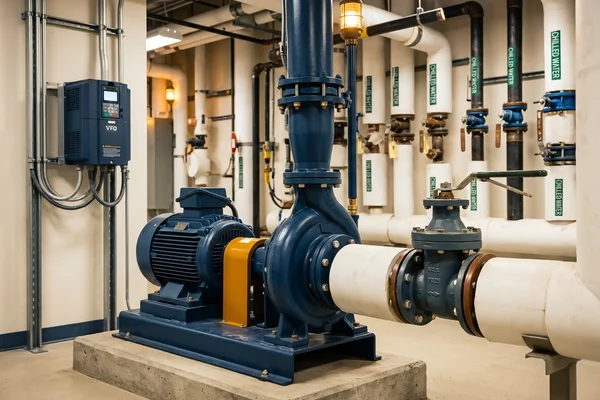
A variable frequency drive (VFD) lets the motor slow down when full flow is not needed. Because fan and pump power drops sharply as speed drops, even a modest speed reduction cuts energy use substantially. That is where the part-load efficiency gains come from.
Where VFDs Pay Back Fastest
| Application | Why it works |
|---|---|
| Supply and return fans on large RTUs and air handlers | Airflow varies with load and occupancy |
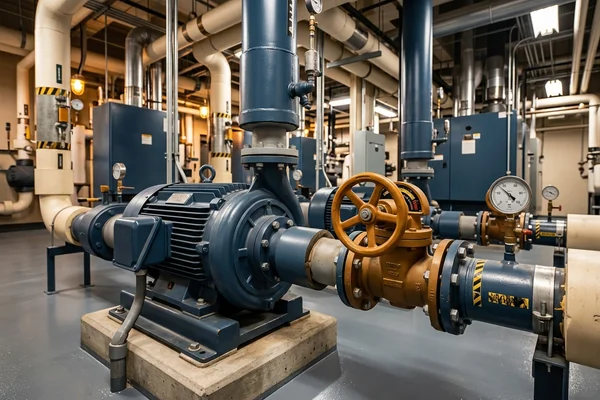
| Hydronic circulation pumps | Throttled valves replaced by speed control |
| Condenser water pumps | Flow matched to chiller load |
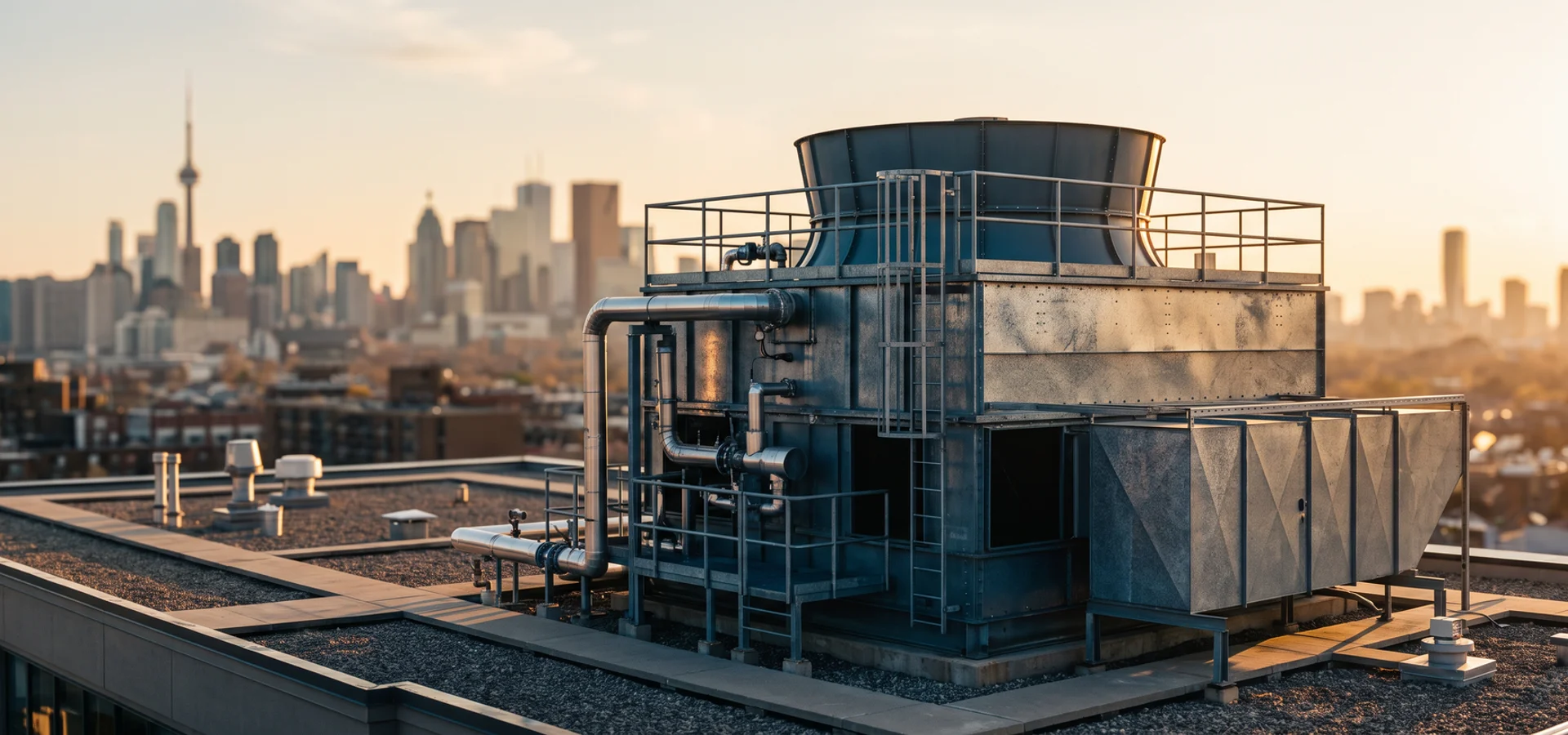
| Cooling tower fans | Fan speed matched to heat rejection |
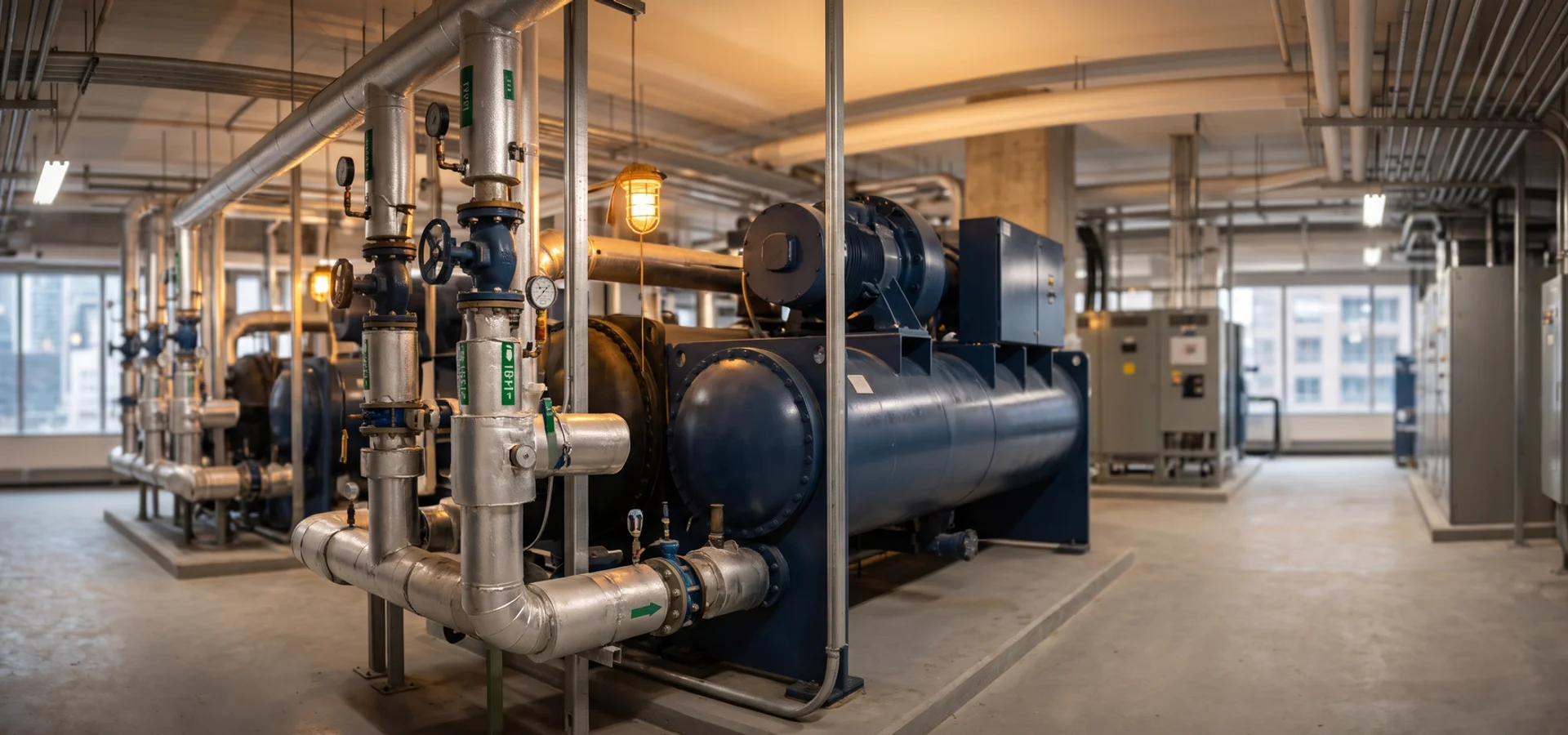
| Chillers (variable speed) | Better part-load performance |
Signs a building is a good candidate: high demand charges on the hydro bill, balancing valves pinched half closed, noisy pumps and fans that run at one speed all day.
What a VFD Retrofit Includes
- Drive sizing for the motor and application
- Electrical installation by our ESA-licensed crew, with bypass where needed
- Harmonics management with filters or line reactors when the electrical system needs it
- Controls integration over BACnet or Modbus
- Before-and-after logging of motor load and run hours
On smaller fans, an ECM motor is often a better fit than a separate VFD. We recommend whichever pays back.
How Much Does a VFD Upgrade Cost?
$8K-$40K per unit, installed in 2-5 days. Many retrofits qualify for Save on Energy incentives, filed before the drive is ordered and netted on your invoice.
VFDs as Part of Bigger Projects
VFDs often ride along with plant work: tower fans during cooling tower service, pumps during mechanical room retrofits, and variable-speed upgrades during commercial chiller service. Doing them together saves a shutdown and simplifies the rebate filing.